Attendance numbers no longer satisfy stakeholders. To justify event budgets, you need to prove engagement drives business results. This guide shows you how to measure and demonstrate the true ROI of audience engagement.
Beyond Vanity Metrics
Registration and attendance are starting points, not success measures. Real ROI comes from engagement depth, knowledge retention, behavior change, and business outcomes. Shift your measurement focus accordingly.
Measurement Mindset
The question is not how many people attended but what they did during and after the event. Engagement is behavior, not just presence.
Key Engagement Metrics
- Active participation rate (polls, Q&A, chat)
- Session completion rate for virtual attendees
- Average session rating and NPS scores
- Networking connections made per attendee
- Content downloads and resource access
- Post-event community engagement
Connecting to Business Outcomes
Map engagement activities to business goals. Track leads generated through event interactions. Monitor deal velocity for engaged versus passive attendees. Measure customer retention for those who attend versus those who do not. Quantify product adoption from training events.
Lead Quality Scoring
Not all leads are equal. Score based on engagement depth: attended sessions, asked questions, networked actively, downloaded resources. High-engagement leads convert 3-5x better than passive registrants. Focus on quality, not quantity.
ROI Formula
Calculate cost per engaged attendee, not just cost per attendee. Then track their conversion rates and lifetime value. This reveals true event ROI.
Knowledge Retention Measurement
- Pre and post-event knowledge assessments
- Follow-up quizzes at 30 and 90 days
- Manager surveys on behavior change
- Self-reported application of learning
- Performance metrics correlated with training attendance
Community Impact
Events should spark ongoing communities, not just one-time gatherings. Track post-event forum activity, attendee-to-attendee connections, user-generated content, and return rates for future events. Community engagement extends event value indefinitely.
Attribution Challenges
Events rarely close deals alone. They are touchpoints in longer journeys. Use multi-touch attribution models. Track influenced pipeline, not just sourced pipeline. Compare conversion rates of engaged attendees versus similar non-attendees.
Building Your ROI Dashboard
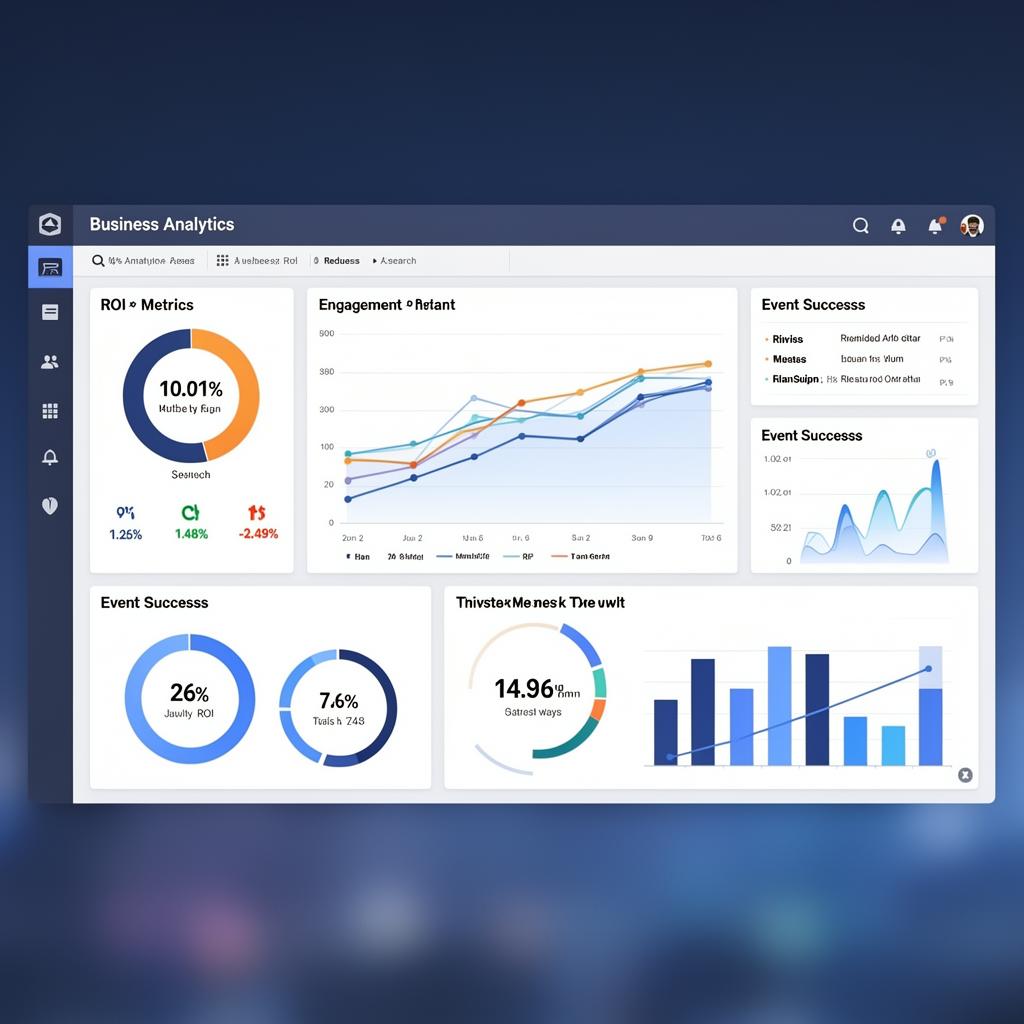
Create executive dashboards that tell the story. Show engagement metrics with context and trends. Connect engagement to revenue impact. Include attendee testimonials and qualitative feedback. Make the business case visual and compelling.
Executive Summary
Leadership cares about pipeline generated, deals influenced, customer retention improved, and employee skills gained. Frame your ROI report in these terms, not participation percentages.